
Let There Be Less Light
A Tanizaki take on how we light storefronts.

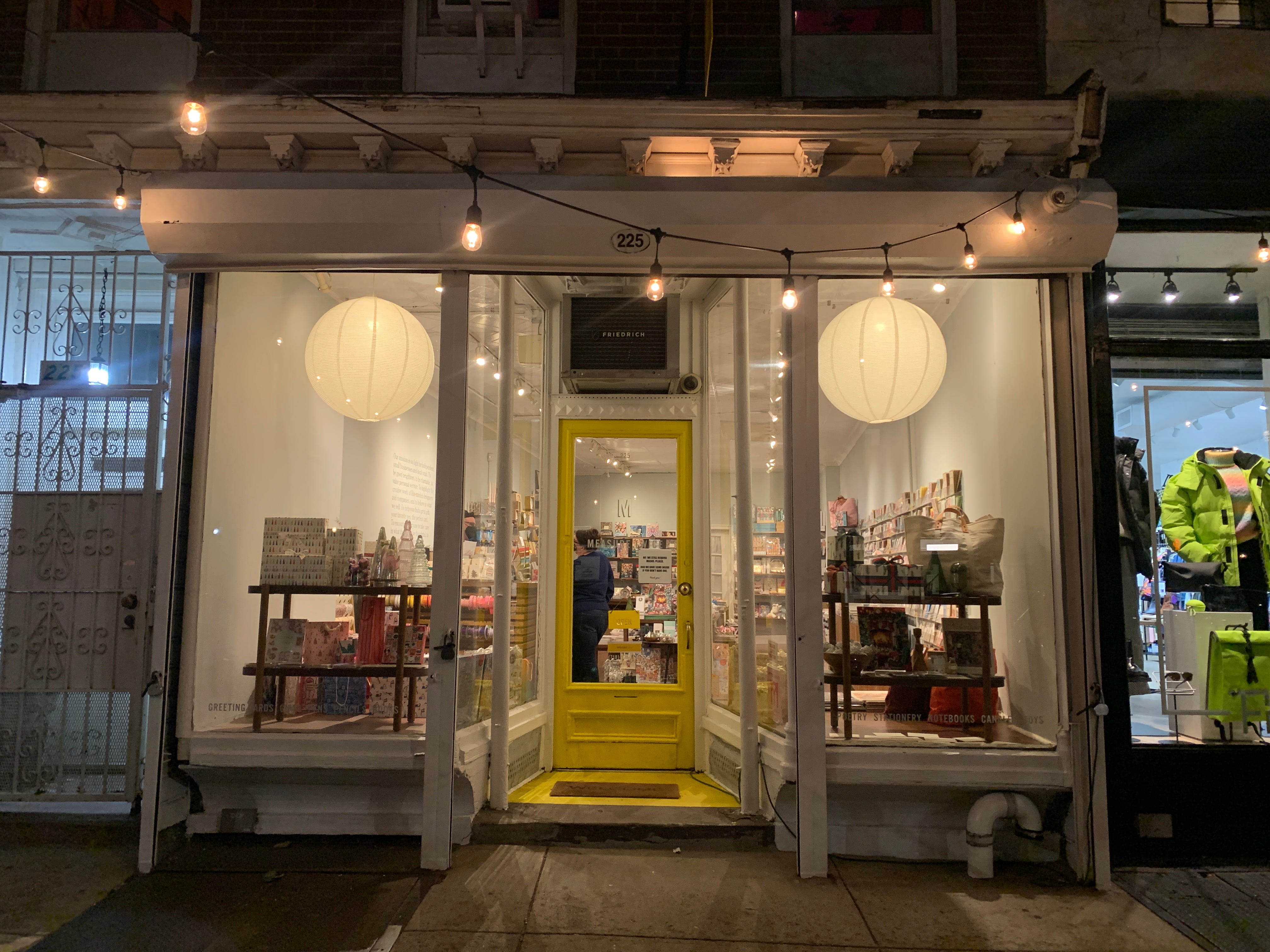
Too much light can ruin a beautiful storefront. Think of it as visual pollution — the glare that flattens everything into sameness. Back in the day, we had clunky bulbs: incandescent, fluorescent, maybe a halogen or two if you were fancy. The options were limited, the glow either harsh or dim. But in that imperfection, there was warmth — a texture to the light that wrapped around people instead of pushing them away.
Fast-forward to now, and LEDs, or light-emitting diodes, have transformed storefront lighting with their efficiency, longevity, and precision. They let us sculpt light instead of just producing it. Yet as the technology advanced, the artistry often disappeared. Where old light bathed us, new light sometimes interrogates us. We learned to measure illumination down to the lumen, but not always to feel it.
Lighting standards have evolved significantly, as technology has evolved, as I just learned in a project where we needed better standards to measure light and allow creative signage, to replace old prohibitions.
Jun’ichirō Tanizaki in his essay “In Praise Of Shadows” reminds us that beauty hides in the gradations, the places light fades into shadow. A storefront comes alive in the gentle contrast between what’s revealed and what’s suggested.
With advancements in technology, storefront illumination has transitioned from inefficient incandescent and fluorescent bulbs to precise LED systems, and the applications can rely on much more precise measurements.
Historically, lighting design relied on candlepower, equivalent to the candela, standardized in 1960, to quantify luminous intensity. Measurement was done using watts per square foot, a simplistic metric that focused on power consumption because it was an easy way to estimate energy use and ensure basic illumination with limited technology. LEDs consume 70-80% less energy than incandescent bulbs, producing equivalent lumens with significantly lower wattage, so those metrics are now obsolete.
Furthermore, that approach overlooked actual light distribution and specific illumination needs. Foot-candles, defined as lumens per square foot illuminating a surface, and candelas, measuring light intensity in a specific direction, were used but less emphasized in earlier standards.
New lighting technology allows more precision. Tiny and versatile, LEDs offer precise control over color temperature (from warm 2700K to cool 6500K), beam direction, and intensity (measured in candelas), enabling designers to craft targeted illumination and come up with very creative lighting schemes.
As a bonus, their lifespan far exceeds that of incandescents or fluorescents, reducing maintenance needs for storefronts where frequent bulb changes disrupt operations. LEDs allow designers a big playing field, but they have a down side: when used carelessly, LEDs flood, flatten, sterilize, and erase the mystery. Cheap fixtures flicker and cast cold blue tones that fatigue the eye and mind.
The result is a kind of sensory exhaustion, a light too clean to dwell in, a dearth of contrast and quiet beauty.
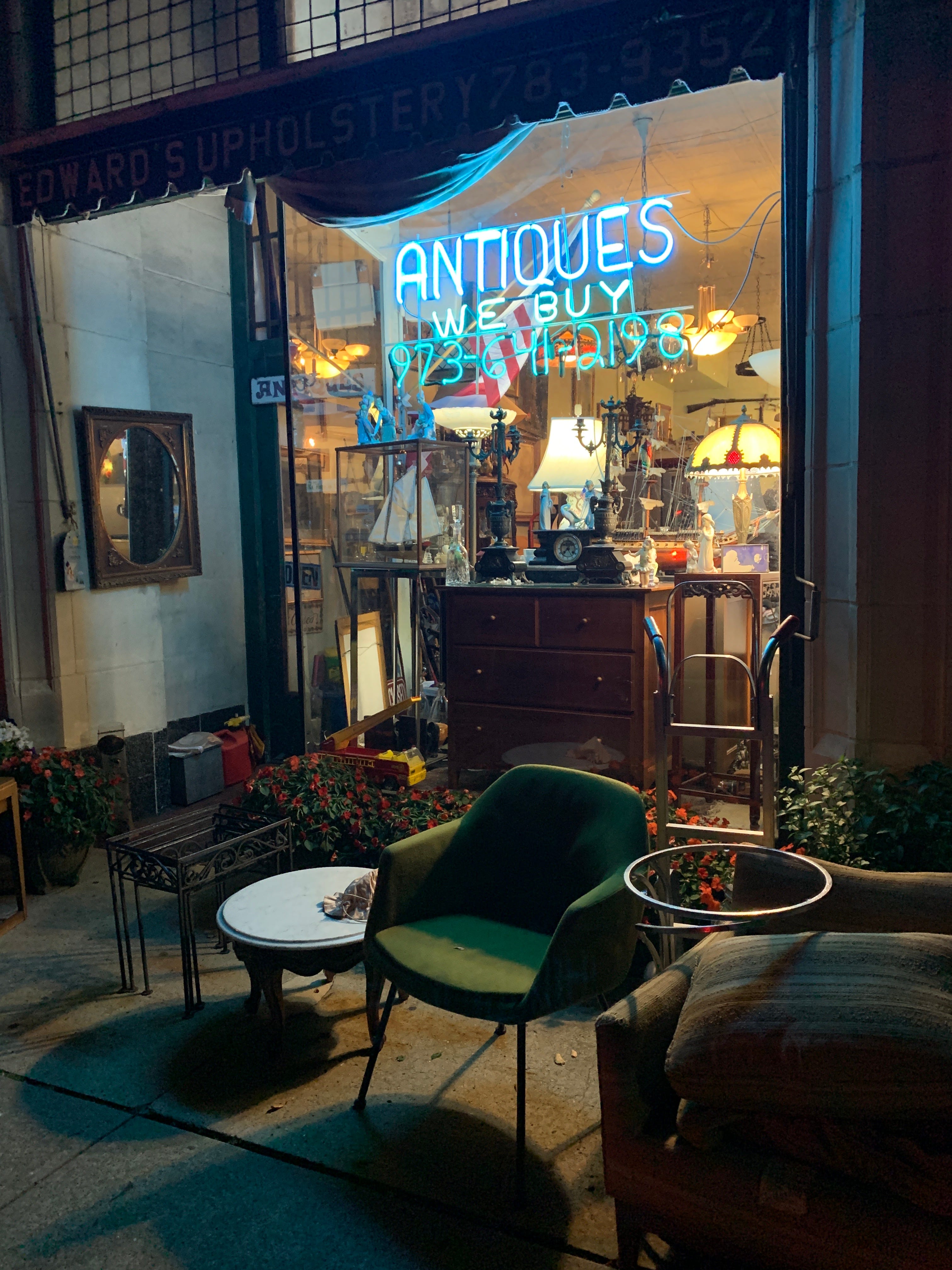
Lower-quality LEDs, particularly under continuous exposure, can pose health concerns due to their high blue light output and potential flickering. Excessive blue light, often prominent in LEDs, may strain eyes, disrupt sleep by suppressing melatonin, and trigger migraines or discomfort in sensitive individuals.
Flickering, caused by subpar drivers or dimming systems, may lead to visual discomfort, eye strain, headaches, dizziness, and disrupted sleep and circadian rhythm, especially for those with neurological sensitivities. These issues are most pronounced in cheap fixtures but may be mitigated, as technology advances, with high-quality LEDs that use warmer tones and stable drivers, reducing risks while maintaining efficiency.
Incandescent and halogen bulbs, by contrast, glow with the softness of firelight. They hum quietly in the background, never demanding attention, and their warmth deepens as they dim. They waste energy, yes, and they don’t last long, but their imperfection is their grace. OLEDs, or organic LEDs, bring back some of that soft, even, diffuse, and low-flicker light, controllable with apps or voice commands, though still rare and expensive. Quantum dot lighting refines LED into something richer and more human, less sterile and more like morning sunlight filtered through fabric. It is, however, emerging tech and not widely used yet.
The conversation has shifted from mere energy use, tied to brightness due to technological limitations, which often creates visual noise and contributes to light pollution on our streets, to the intentional application of light to enhance the mood, increase comfort, and signal care.
The goal is to create a welcoming atmosphere, draw in customers, and protect their well-being from the negative effects of poor light quality. A well-lit storefront draws people in with warmth, guides their eyes gently, and lets the night keep some of its mystery.
Tanizaki would tell us that shadow is not the absence of light but its partner, and that to illuminate everything is to destroy depth.
The most effective storefronts understand that balance. They let darkness outline the glow, turning light into a living material. Mastering this complex interplay is where true expertise transforms a simple storefront into the reason people come to downtown.